
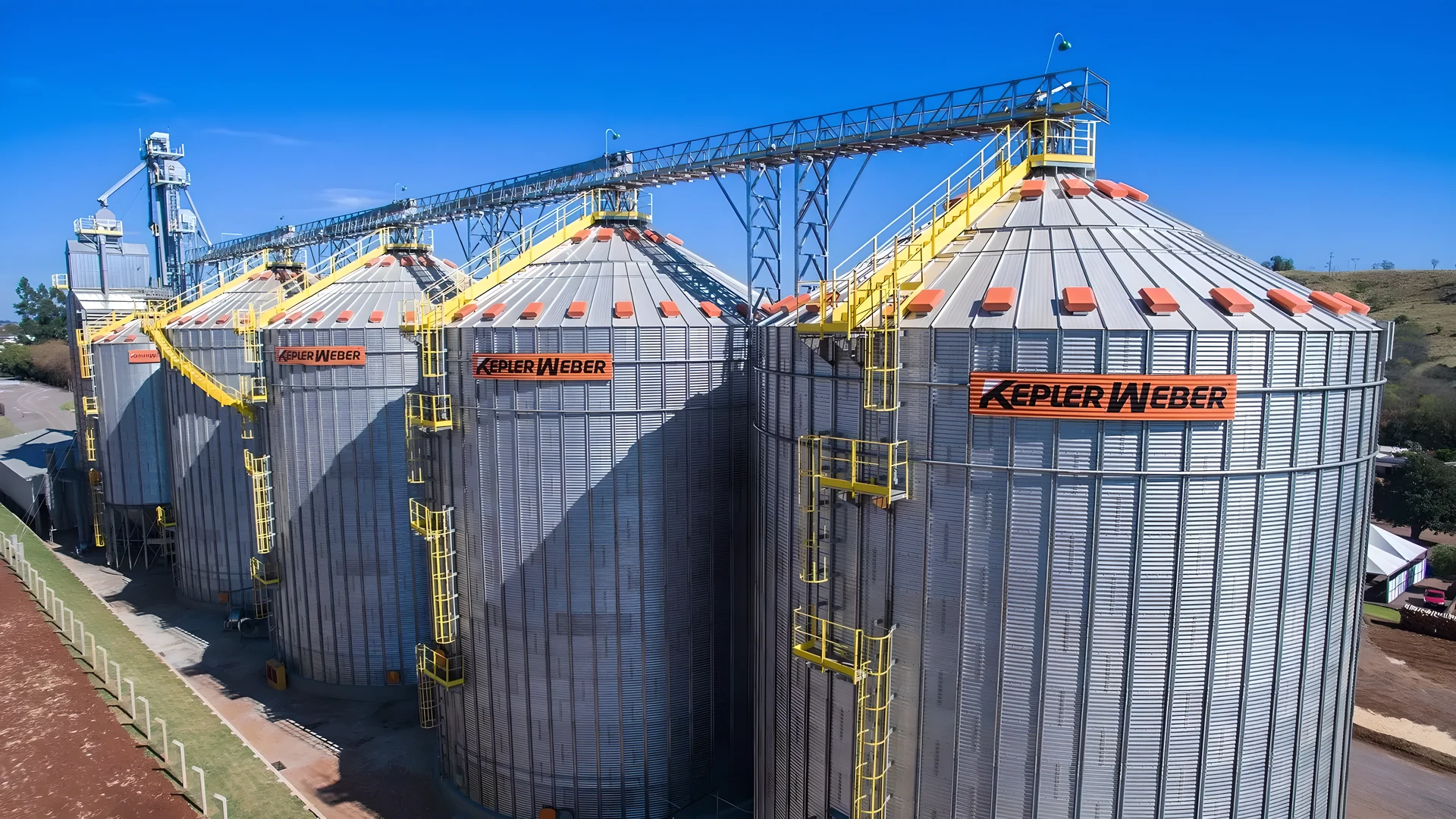
Kepler Weber (KEPL3) presented an update to its KW2030 strategic plan at Kepler Day 2026, held on November 26, 2026. The company said it has progressed "clearly and consistently" on 14 of the plan's 15 aspirations, based on the last 12 months ended 3Q26. Revenue and margin remain a "major challenge," pressured by the agribusiness cycle.
Among the indicators, recurring revenue in R&S (recurring services) rose from 18% to 22% of revenue. The monitored static capacity (storage space) grew from 12% to 24%. Revenue from other markets and segments went from 32% to 40%, and revenue from new products from 3% to 13%. NPS (customer satisfaction index) went from 68 to 80, and market share from 27% to 30%.
At Procer, the group's warehouse monitoring company, connected Brazilian static capacity reached 24.3% in September 2026, versus 6.1% in 2020. Connected silos and warehouses total 13,415 units, versus 2,696 in 2020, and the value of monitored grain is R$155 billion. Procer's revenue grew 6.4% in 9M26 over 9M25. The company is also preparing solutions for insurers, with premium discounts for connected units.
The company projects that the storage capacity needed in the country will rise from 233 million to 366 million tons by 2036, an increase of 57%. The 2026E Brazilian grain harvest is estimated at 362 million tons, and the storage deficit is about 39% in 3Q26. Kepler Weber said the KW2030 goals are long-term aspirations, with no mandatory timeline, and do not constitute a financial projection.
In innovation, investment in R&D&I (research, development and innovation) reached 0.87% of net revenue in 9M26, versus 0.68% in 2025. New products accounted for 13.0% of net revenue and versioning for 50.5% in the 12 months through 3Q26. The company reported R$20 million in cost reductions for the year and 163 projects delivered between 2021 and 2026.
Is KEPL3 worth investing in?
- Price
- R$ 6.69
- as of 11/24/2026
- Dividend yield
- 4.31 %
- P/L
- 11.83
- P/VPA
- 1.48